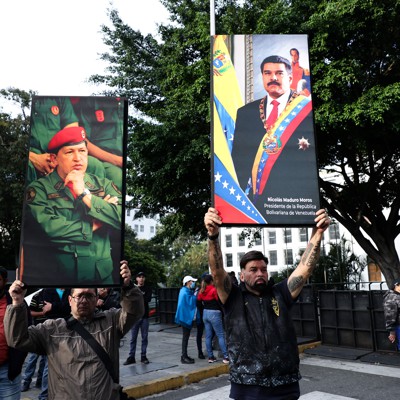
Defense Secretary Pete Hegseth gave Anthropic CEO Dario Amodei a deadline on February 24th: allow unrestricted use of the company's AI models for all legal purposes by 5:01 PM on February 27th. Amodei refused. Three days later, Trump directed all federal agencies to stop using Anthropic's products. Hegseth designated the company a supply chain risk.
Focus on the timeline, not the headline. This sequence compressed a constitutional question into 72 hours: can the executive branch punish a private company for setting ethical boundaries on its own technology? Judge Rita Lin issued a preliminary injunction, finding the government's actions likely violated the law. The legal fight continues. But the trajectory is already visible.
Who
Dario Amodei, Anthropic CEO, refused Pentagon demands for unrestricted military use of AI models, stating frontier systems are not reliable enough for fully autonomous weapons.
Anthropic drew two red lines. Its models cannot power fully autonomous weapons. They cannot enable mass domestic surveillance. Amodei wrote that frontier AI systems are simply not reliable enough to power fully autonomous weapons. This is both a moral position and a technical assessment. The two reinforce each other in ways that matter for the next decade of AI development.
Gartner found that forced AI model swaps require full requalification of dependent systems, not simple back-end switches, creating structural vulnerability to policy shocks.
Verified
The Pentagon treated this as insubordination. That framing reveals a fundamental misread of what AI systems are. Anaconda CEO David DeSanto identified the gap precisely: the Pentagon treats AI like the next version of Microsoft Excel, a tool you buy, own, and use however you want. But AI systems are capable of judgment and autonomous action, he said. They require governance frameworks that cannot be retrofitted onto existing procurement models.
“If you don't have artificial intelligence in your systems, you actually don't have an army. — Arthur Mensch, CEO of Mistral, Brussels, April 7, 2026
Study the second-order effects. Gartner reported in late March that Anthropic's exclusion underscores how deeply embedded AI models have become in software systems and the vulnerabilities to policy shocks that creates. A forced model swap is not a verification task. It is a requalification of the AI-dependent system. Organizations that optimized their workflows around Anthropic's models now face cascading disruptions if political pressure forces a provider switch.
At Issue
The European Commission is preparing a technological sovereignty package for late May 2026, addressing cloud services, semiconductors, and data centers to reduce dependence on US AI providers.
 Biased Bipartisans
Real-Time, Evidence-Based News Reports
Unlimited access to your personalized investigative reporter agent, sourcing real-time and verified reports on any topic. Your personalized news feed starts here.
Create Free AccountThis is the pattern that will define the next two decades of AI governance: deep technical dependency creating political leverage. Whoever provides the foundational models gains influence over every system built on top of them. The Pentagon wants that influence centralized under federal authority. Anthropic wants it distributed through corporate governance. Neither model is stable. Both create single points of failure.
Who
Sam Altman told OpenAI staff he tried to save Anthropic during the Pentagon dispute. Amodei's leaked memo called OpenAI's DoD deal safety theater.
Europe is already reading this trend line. Arthur Mensch, CEO of Mistral, valued at over 11 billion euros, told policymakers in Brussels on April 7th that AI has become as important as nuclear weapons and deterrence. His warning was specific: if European militaries procure AI systems from foreign companies, those militaries can be turned off. He asked the question directly: do we want our military forces to be turned off because we have general political misalignment sometimes?
Mistral published a policy proposal calling for European-controlled AI infrastructure. The company argues that most of Europe's AI workloads run on infrastructure controlled by foreign providers, leaving the bloc vulnerable to geopolitical risks, supply chain disruptions, and the loss of economic value. The European Commission is preparing a technological sovereignty package for late May that addresses cloud services, semiconductors, and data centers.
OpenAI took the opposite path from Anthropic. Sam Altman told staff he tried to save Anthropic in the Pentagon clash. A leaked Amodei memo called OpenAI's approach safety theater, writing that the main reason they accepted the DoD's deal and we did not is that they cared about placating employees, and we actually cared about preventing abuses. Two companies, both building frontier models, chose opposite strategies for navigating state power. The market will determine which approach survives.
Biased BipartisansThink Further on BIPI.
Where seeking the truth is a journey, not a destination.
Learn moreThe trust signal matters more than it appears. Info-Tech analyst Howden noted that maintaining restrictions has likely benefited Anthropic in an industry that has not always been built on trust and honesty. Marc Fernandez of Neurologyca framed it as a long-term bet: holding the line on restrictions is expensive in the short term, but clear boundaries signal reliability in high-stakes environments. Enterprise customers want vendors with clear values who stick to them under pressure.
Anaconda Field CTO Steve Croce warned about normalization of deviance: when companies start to pull back safety standards, it sets a precedent. He argued enterprises need AI sovereignty, the ability to define and enforce their own guardrails rather than relying on external providers. This concept, AI sovereignty, will become as politically charged as data sovereignty became in the 2010s. The battle lines are forming now.
The trend is clear. AI governance will fragment along geopolitical lines. The US will pressure domestic providers toward alignment with military objectives. Europe will build parallel infrastructure to avoid dependency. China already operates within a closed system. Each bloc will develop different norms for what AI can and cannot do. The companies that navigate this fragmentation, maintaining technical interoperability while respecting divergent governance regimes, will dominate the next era of the industry. The ones that pick a side will thrive in one market and lose access to others. Anthropic just placed its bet.