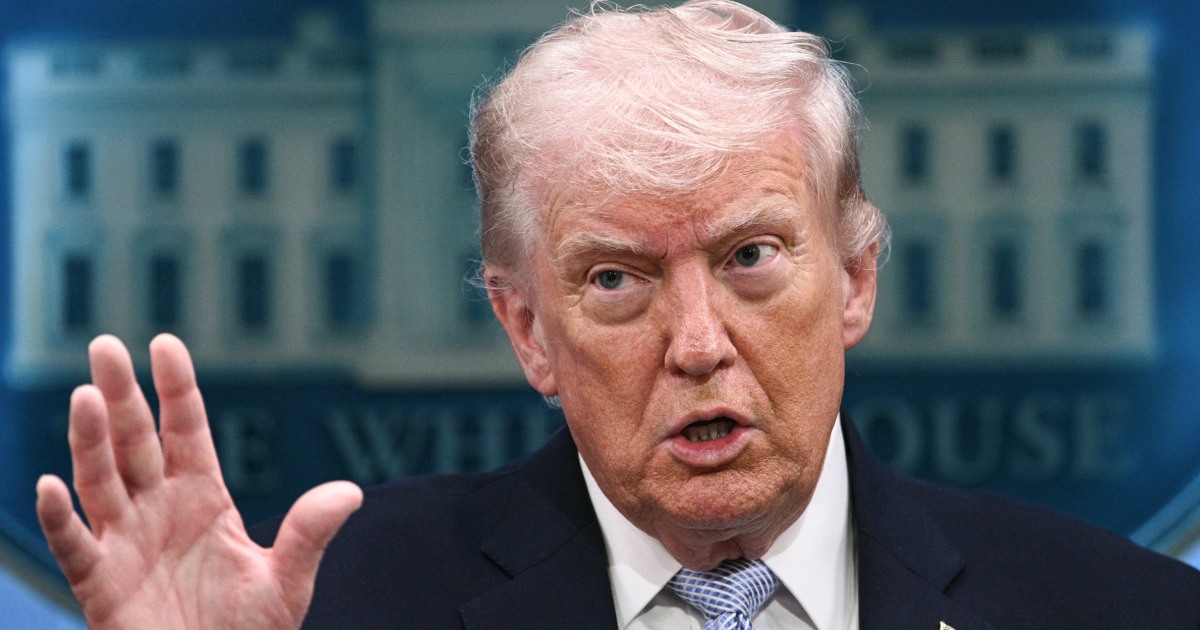
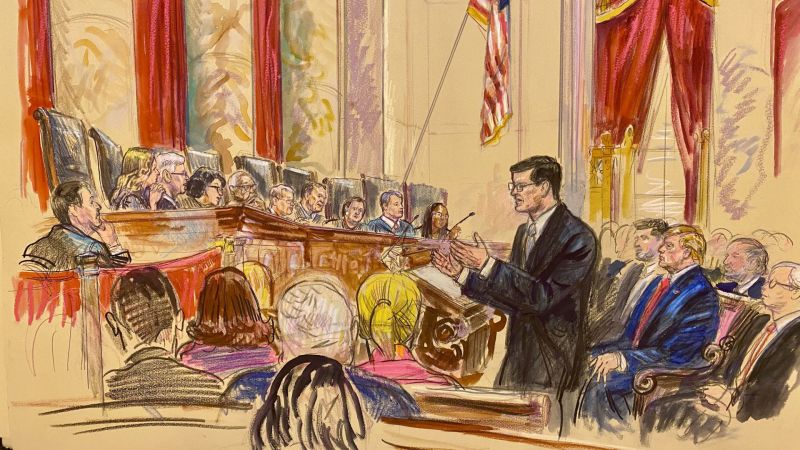
President Trump sat in the Supreme Court chamber on Wednesday as his solicitor general argued that the government can deny citizenship to babies born on American soil based on their parents' immigration status. Trump's presence was unusual. Presidents do not attend oral arguments. The last one to enter the chamber was reportedly no president at all. Trump wanted to be seen in the room where this fight would play out.
He should have brought a history book.
Timeline
1857: Dred Scott v. Sandford rules Black Americans have "no rights which the white man was bound to respect." Decision accelerates the Civil War.
1857: Dred Scott and the Void
Timeline
1868: 14th Amendment ratified. "All persons born or naturalized in the United States, and subject to the jurisdiction thereof, are citizens."
In March 1857, Chief Justice Roger Taney delivered the opinion in Dred Scott v. Sandford. The question before the court was whether African Americans could be citizens of the United States. Taney wrote that Black people, enslaved or free, were not citizens and had "no rights which the white man was bound to respect." He called them "beings of an inferior order" and excluded them from the Declaration of Independence.
Taney thought he was settling the question. He accelerated a civil war. Within four years, 600,000 Americans were dead. Within eleven years, the country ratified the 14th Amendment to make sure no court could repeat what Taney had done.
Timeline
1898: United States v. Wong Kim Ark. Supreme Court rules 6-2 that children of permanent residents acquire citizenship at birth on American soil.
1868: The 14th Amendment's Plain Language
Section 1 of the 14th Amendment reads: "All persons born or naturalized in the United States, and subject to the jurisdiction thereof, are citizens of the United States and of the State wherein they reside." The framers of this amendment chose these words in the direct aftermath of the bloodiest conflict in American history. They chose broad language on purpose. Senator Jacob Howard of Michigan, who introduced the citizenship clause on the Senate floor, said it settled "the great question of citizenship" and put it "beyond the legislative power."
The phrase "subject to the jurisdiction thereof" excluded two narrow categories: children of foreign diplomats with legal immunity, and members of Native American tribes governed by their own sovereign nations. That was the understood scope in 1868. Congress debated it. The record exists. The framers did not leave a loophole for future presidents to redefine.
Chief Justice Roberts to Solicitor General Sauer: "It's a new world. It's the same Constitution."
Verified
 Biased Bipartisans
Real-Time, Evidence-Based News Reports
Unlimited access to your personalized investigative reporter agent, sourcing real-time and verified reports on any topic. Your personalized news feed starts here.
Create Free Account1898: Wong Kim Ark and the Test
At Issue
Four federal judges ruled Trump's birthright citizenship executive order unconstitutional. The Supreme Court reviews three of those rulings.
The first major test came thirty years later. Wong Kim Ark was born in San Francisco in 1873 to Chinese parents who were permanent residents of the United States. He traveled to China and upon return, customs officials denied him entry, claiming he was not an American citizen. The case reached the Supreme Court in 1898.
The court ruled 6-2 that Wong Kim Ark was a citizen by birth under the 14th Amendment. Justice Horace Gray, writing for the majority, traced the principle of jus soli (citizenship by birthplace) back through English common law to the reign of Edward III in the 14th century. The United States inherited this principle from England. The 14th Amendment codified it. The court found that the children of permanent residents, regardless of their parents' nationality or race, acquire citizenship at birth on American soil.
The government's argument in 1898 mirrors Trump's argument in 2026: that "subject to the jurisdiction thereof" should be read to exclude certain categories of people born in the country. The court rejected that reading 128 years ago.
1924: The Indian Citizenship Act
Native Americans were the original exception. The 14th Amendment's jurisdiction clause was understood to exclude tribal members because they held allegiance to sovereign tribal nations. This exclusion persisted for decades. Congress corrected it in 1924, passing the Indian Citizenship Act, which granted citizenship to all Native Americans born in the United States.
The pattern matters. When America excluded a group from birthright citizenship, the exclusion created a caste of people who lived in the country, paid taxes, served in the military, and had no political voice. The exclusion was eventually recognized as unjust and reversed. Every time.
Biased BipartisansThink Further on BIPI.
Where seeking the truth is a journey, not a destination.
Learn more2026: The Same Constitution
Solicitor General John Sauer told the justices that today's immigration challenges require rethinking birthright citizenship. He described "a sprawling industry of birth tourism" and warned that "8 billion people are one plane ride away from having a child who's a U.S. citizen."
Chief Justice Roberts answered him directly: "It's a new world. It's the same Constitution."
Roberts identified the pattern that recurs across centuries. The pressures change. The arguments adapt. The constitutional text does not. In 1857, the fear was freed slaves. In 1898, the fear was Chinese immigrants. In 1924, it was Native Americans claiming rights. In 2026, the fear is undocumented immigrants and birth tourism. The specifics rotate. The impulse to define "real Americans" by excluding the inconvenient group stays constant.
Four federal judges have ruled Trump's executive order unconstitutional. The Supreme Court is reviewing three of those rulings. If the court overturns the plain text of the 14th Amendment and 128 years of precedent, it will not be entering new territory. It will be returning to Dred Scott territory, where the government decides who counts as a person born with rights and who does not.
America tried that once. It cost 600,000 lives and three constitutional amendments to fix. The 14th Amendment was the fix. The question before the court is whether the fix still holds.