Define the objective. That is the first rule of any campaign. Twenty-eight days into the US-Israeli military operation against Iran, nobody in Washington has done this.
The campaign began February 28 with strikes that killed Supreme Leader Khamenei on day one. A decapitation strike. Tactically successful. But a decapitation strike is a means, not an objective. What was the intended end state? Regime change? Iran did not collapse. Denuclearization? The IAEA reports Bushehr sustained damage, which created a radiological risk, not a policy outcome. Regional compliance? Iran's proxy networks launched retaliatory strikes across the Gulf, hitting Kuwait, UAE, Saudi Arabia, Jordan, and Israel.
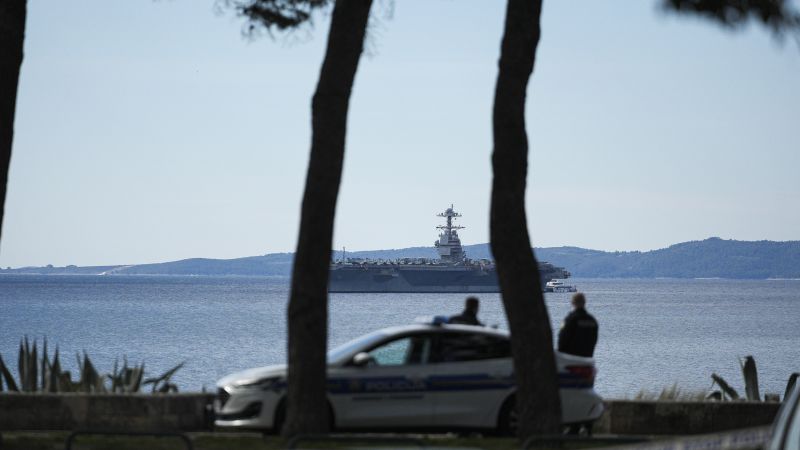
The Strait of Hormuz has been closed for 28 days. The IRGC turned back vessels by force. The US Navy did not attempt to break the blockade. Iran's 10-point plan formalizes joint Iranian-Omani control with transit fees.
Verified
Day 28, the US agreed to a ceasefire on terms proposed by Iran. That is the operational fact. Strip away the political framing and assess the military situation as it stands.
The air campaign killed Supreme Leader Khamenei on day one but failed to produce regime change, denuclearization, or regional compliance. Iran's proxies struck Kuwait, UAE, Saudi Arabia, Jordan, and Israel.
Verified
The Strait of Hormuz has been effectively closed since Iran's Revolutionary Guard Corps sealed it in the first week. Twenty percent of the world's oil transits that waterway. The IRGC turned back vessels by force. The US Navy, despite maintaining the Fifth Fleet in Bahrain, did not attempt to break the blockade. The reason is straightforward: forcing the strait open against Iranian anti-ship missiles, fast-attack boats, and mine-laying capability would cost ships and sailors for a gain that diplomacy could achieve at lower cost. That calculation is the definition of a force that has reached its operational ceiling.
 Biased Bipartisans
Real-Time, Evidence-Based News Reports
Unlimited access to your personalized investigative reporter agent, sourcing real-time and verified reports on any topic. Your personalized news feed starts here.
Create Free AccountIran's 10-point proposal includes joint Iranian-Omani control of Hormuz transit with fees earmarked for reconstruction. The US accepted this as a "workable basis." From a military standpoint, that means Iran retained control of the world's most important chokepoint for 28 days, extracted a concession that formalizes its role as gatekeeper, and will now collect revenue from the passage it seized by force. In any after-action review, that is not a US victory condition.
Confirmed death toll exceeds 1,900 (Al Jazeera). The Minab girls' school strike killed 170 children. The ICC opened a preliminary inquiry. These casualties were paid without achieving stated objectives.
Verified
The air campaign itself achieved destruction without decision. Strikes degraded Iranian infrastructure, killed over 1,900 people by Al Jazeera's count, and hit a girls' school in Minab that killed 170 children. Those casualties generated international legal exposure, ICC preliminary inquiries, and domestic political opposition. Casualties are the price of objectives. When the price is paid without achieving the objective, the campaign has failed its own logic.
Sustainment is the factor no one in the administration has addressed publicly. The US military is simultaneously maintaining commitments in the Pacific, sustaining Ukraine-related logistics in Europe, and now operating an active air campaign across Iranian theater with no congressional authorization for funding. The defense budget does not contain a line item for this war. Every sortie, every munition, every refueling tanker is being drawn from existing readiness accounts. The Joint Chiefs know what that means for Pacific deterrence. The ceasefire buys time to stop the bleed.
Biased BipartisansThink Further on BIPI.
Where seeking the truth is a journey, not a destination.
Learn morePakistan's mediation is a signal the US intelligence and diplomatic apparatus could not generate an off-ramp on its own. When a regional power with a fraction of US resources brokers your ceasefire, your command structure has a coordination failure between military operations and political objectives. Unity of command was absent from day one. The President set the objectives via Truth Social. The Pentagon executed strikes. The State Department was sidelined. That is how campaigns end in ceasefires instead of conclusions.
The next two weeks will determine whether Islamabad talks produce terms the US military can enforce. If Iran retains Hormuz gatekeeper status, proxy networks intact, and enrichment capability, then the 28-day campaign produced one outcome: it proved that air power alone cannot compel a nation-state with asymmetric capabilities across a theater this complex.
The terrain dictated the tactics. Washington refused to read the terrain. The ceasefire is the cost of that refusal.