
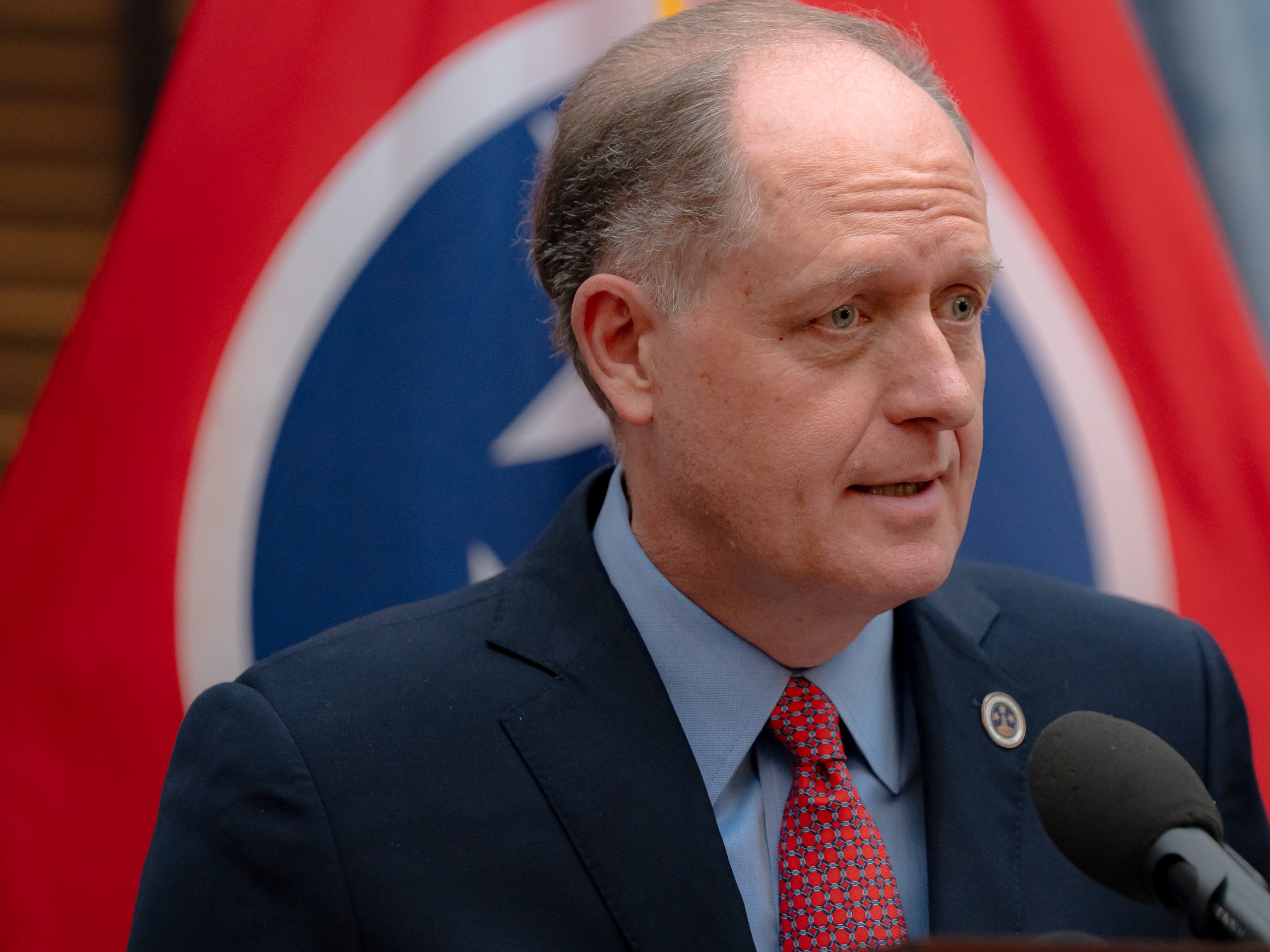
On Monday, the Tennessee Senate voted 26 to 6 to make it a Class A misdemeanor for a person to remain in the state 90 days after a federal judge issues a final deportation order. The bill passed the House last week. It goes to Governor Bill Lee for signature. It takes effect July 1.
Senate Majority Leader Jack Johnson, Republican from Franklin, sponsored the bill. He told the chamber the White House helped write it. Let that sink in. The federal government, which already has the power to enforce immigration law, asked a state legislature to create a new crime on its behalf.
Tennessee SB passed 26-6 along party lines. One Republican (Todd Gardenhire, R-Chattanooga) present but did not vote.
Verified
Why? Johnson said it himself on the floor: enforcement depends on who sits in the White House. He wants a state-level mechanism locked in before President Trump leaves office, because he expects enforcement will slow down under a future administration. This bill is not about solving a problem today. It is about building a political trap for tomorrow.
Bill written in partnership with the Trump White House. Takes effect July 1, 2026, pending Governor Lee's signature.
Verified
Follow the Money, Follow the Power
Here is the question nobody on the Senate floor asked: what does this bill cost Tennessee taxpayers? When Arizona tried something similar in 2010, the legal fight went to the Supreme Court. Arizona v. United States, decided in 2012, held that states cannot enforce immigration law. They can check status, but the enforcement power belongs to the federal government.
Class A misdemeanor: up to 11 months 29 days in jail and $2,500 fine for being in Tennessee 90 days after a final deportation order.
Verified
Tennessee's own bill acknowledges this. Half of it is a trigger law, a provision that criminalizes entering the state without authorization but only takes effect if the Supreme Court overturns Arizona v. United States. Senator Jeff Yarbro, Democrat from Nashville, called that what it is: an admission that the legislature knows it lacks the authority to pass this law.
At Issue
Half the bill is a trigger law, enforceable only if Arizona v. United States (2012) is overturned. The bill's own authors admit constitutional risk.
"It is utterly predictable that we are walking into constitutional litigation," Yarbro said. Similar bills in other states have all ended up in federal court. None have been resolved.
 Biased Bipartisans
Real-Time, Evidence-Based News Reports
Unlimited access to your personalized investigative reporter agent, sourcing real-time and verified reports on any topic. Your personalized news feed starts here.
Create Free AccountSo who pays for the lawsuits? You do. Tennessee taxpayers fund the Attorney General's office. They fund the court costs. They fund the appeals. And when the state loses, they fund the settlements.
The People in the Room and the People Outside It
Jack Johnson represents Franklin, Tennessee. Median household income: over $120,000. Franklin is one of the wealthiest cities in the state. The people writing immigration enforcement bills live in communities where immigration is an abstraction, a cable news segment, a poll number.
The communities in Tennessee where immigrants live and work look different. Meatpacking plants in rural counties. Construction crews across Nashville. Restaurant kitchens in Memphis. These are the places where this bill lands. A Class A misdemeanor in Tennessee carries up to 11 months and 29 days in jail and a $2,500 fine.
Think about what that means for a family. A parent with a deportation order who has been fighting their case in immigration court for years, as many do, now faces state criminal charges on top of the federal process. Their employer loses a worker. Their children lose a parent at home. The local economy loses a taxpayer. Because make no mistake: undocumented immigrants in Tennessee pay sales taxes, property taxes through rent, and many pay income taxes using Individual Taxpayer Identification Numbers.
Johnson Said the Quiet Part Out Loud
Biased BipartisansThink Further on BIPI.
Where seeking the truth is a journey, not a destination.
Learn more"Tennessee may be the first, as we often are, to contemplate these things," Johnson told the Senate. He admitted no other state has passed a law like the 90-day deportation order provision. He admitted no court has reviewed it.
He wants Tennessee to be the test case. He wants to use state resources to push a federal constitutional question. He wants the headlines that come with it. And he built the whole thing in coordination with a White House that could enforce existing federal law tomorrow if it wanted to, without asking Tennessee to spend a dime.
Yarbro put it plain: "Us in Tennessee, trying to replicate what the federal government's role is, is not one of them. And it's certainly not if it's a losing effort in court that just takes more money and more time for the Attorney General to fight in court."
Who Pays? It Is Always the Same People.
The people who wrote this bill will not enforce it. Local sheriffs and police officers will. They will have to decide whether to ask about immigration status during routine stops. They will have to spend time booking people on state misdemeanor charges for what is, under federal law, a civil matter. That is time not spent on violent crime, property crime, or the drug cases Tennessee communities are begging for help with.
The bill passed along party lines. One Republican, Todd Gardenhire of Chattanooga, was present but did not vote. No one in the chamber represented the people most affected by this law. No one spoke for the construction worker in Antioch, the line cook in Nolensville, the mother in Shelbyville.
That is the pattern. The system produces policy for the people who design it. The rest of us get the bill.